
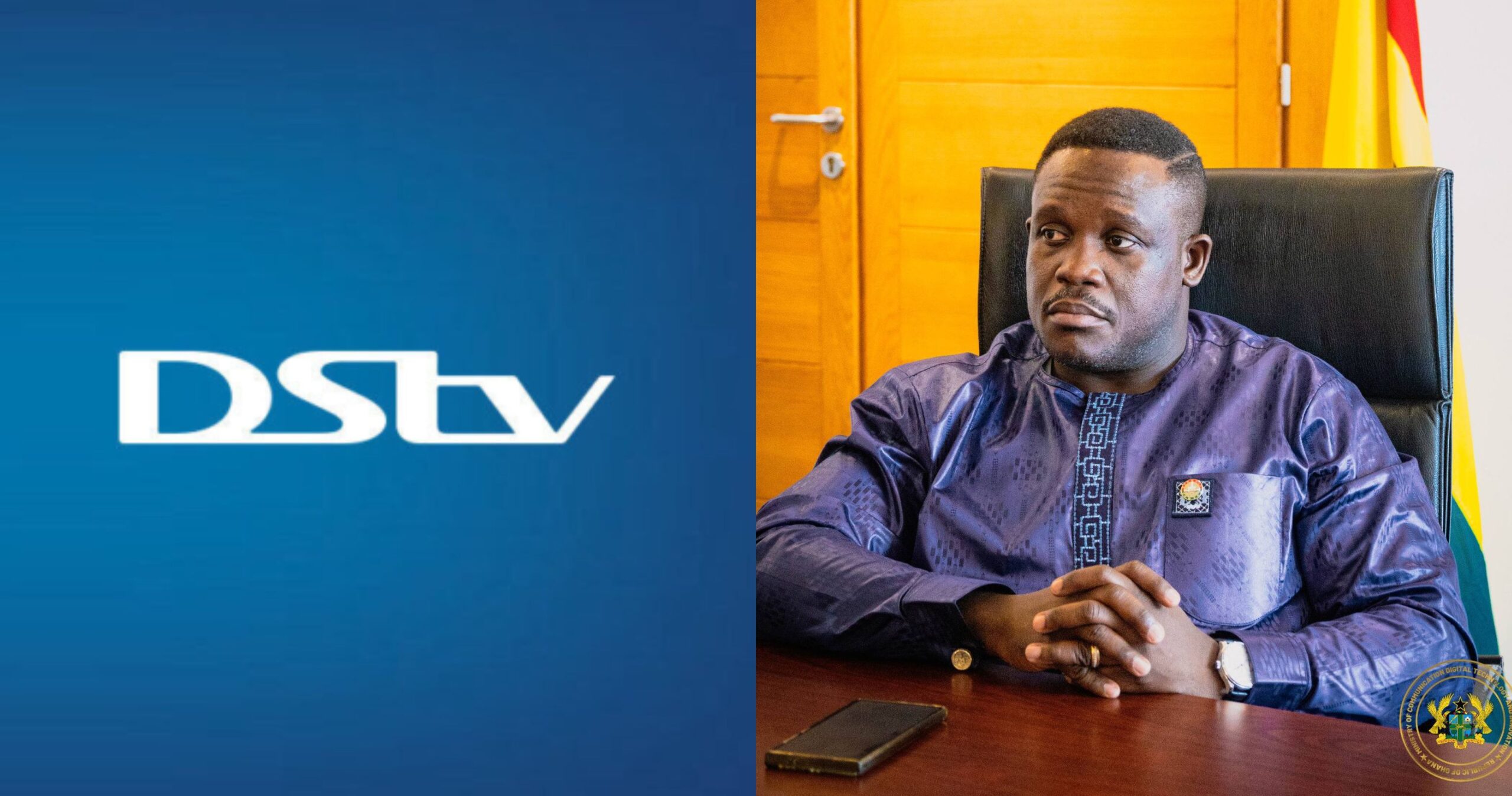
Ghana’s pay-TV landscape has been thrown into the spotlight after an unprecedented standoff between government regulators and MultiChoice Ghana, the operator of DStv and GOtv. With Communications Minister Samuel Nartey George issuing a sharp ultimatum, the future of one of Ghana’s most popular entertainment services now hangs in the balance.
A High-Stakes Ultimatum
Speaking at a press briefing, Minister George accused DStv of showing “disrespect to Ghanaians” by keeping subscription rates high despite growing consumer frustrations. He warned that if MultiChoice failed to implement meaningful reductions, the company’s broadcasting license would be suspended as early as September 6, 2025.
“This is not just about pricing, it’s about fairness to Ghanaians,” George said, insisting that citizens deserved affordable access to television content.
MultiChoice Pushes Back
MultiChoice Ghana, however, has rejected claims that it has already agreed to slash its rates. In a statement carried by GBC Ghana Online, the company stressed that no final decision has been made. That said, executives emphasized they were open to dialogue with both the government and regulators to find a “workable, sustainable solution.”
A Pricing Review Committee in Motion
To address the deadlock, the Ministry has established a special pricing review committee. This body—comprising the Ministry of Communications, the National Communications Authority (NCA), MultiChoice Ghana, and MultiChoice Africa is chaired by Minister George himself. The committee’s mandate: to deliver a clear framework for reduced subscription prices by September 21, 2025.
Mounting Financial Pressure
Adding to MultiChoice’s woes, the company has been slapped with daily fines of GHS 10,000 for failing to provide a full pricing breakdown of its TV bouquets. After 24 days of non-compliance, the accumulated fines now stand at approximately GHS 240,000, further tightening the financial squeeze on the broadcaster.
Beyond Subscription Fees: The Bigger Picture
While many Ghanaian households are eagerly hoping for cheaper TV access, analysts warn that the ripple effects of this dispute could extend far beyond entertainment. By turning the standoff into a very public spat, critics argue that Ghana risks sending mixed signals to foreign investors about the stability and predictability of its regulatory environment.
A report by MyJoyOnline highlighted growing fears that the public nature of these negotiations could undermine Ghana’s reputation as a destination for foreign direct investment (FDI).
The Road Ahead
With the September 21 deadline looming, all eyes are on the pricing committee to strike a compromise. If successful, millions of Ghanaian subscribers could benefit from more affordable access to sports, movies, and entertainment. If not, the country could face the unprecedented shutdown of DStv and GOtv services a move that would leave a gaping hole in Ghana’s broadcasting ecosystem.
Summary at a Glance
- Deadline: September 21, 2025 – Committee’s final date to propose price reduction
- Risk: Shutdown of DStv/GOtv if no deal is reached
- Penalty: GHS 10,000/day in fines (~GHS 240,000 so far)
- Public Impact: Concerns over affordability, regulatory consistency, and investor confidence
Editorial Take
While consumer protection is essential, regulatory disputes of this magnitude are often best handled behind closed doors. Public pressure may win short-term applause, but Ghana must weigh whether it risks long-term investor confidence in the process.
The question now is whether Ghanaians will see real relief in subscription pricing or whether the standoff will escalate into a blackout with unintended consequences.