
Introduction
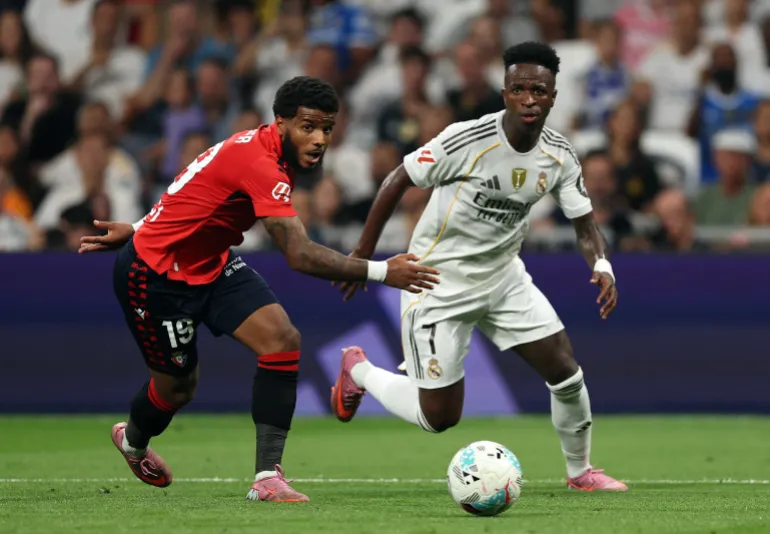
The match between Real Madrid and Osasuna did not merely represent another fixture in La Liga; it was steeped in anticipation and significance for both teams involved. As the season progressed, Real Madrid aimed to solidify their position at the top of the table, while Osasuna sought vital points to enhance their prospects of securing a mid-table finish. Given the competitive nature of La Liga, each match carries weight, affecting not only league standings but also the morale and momentum of the respective squads.
Real Madrid entered the match as favorites, buoyed by a rich history of success and a squad filled with talent. Their attacking prowess and tactical acumen were expected to shine through, putting them in a favorable position to claim three crucial points. Conversely, Osasuna, known for their resilience and strategic play, were determined to pull off an upset, aiming to disrupt the rhythm of the title challengers. This match was a testament to football’s unpredictability, as teams often rise to the occasion when pitted against formidable opponents.
Fans from both sides were invested, not only in terms of league implications but also in the narrative that each game created. For Real Madrid, winning this match would reaffirm their dominance and keep pressure on their rivals, while Osasuna’s ambition was to demonstrate that they could compete with elite clubs despite being labeled as underdogs. The stakes were high, making the contest between these two teams a focal point in the ongoing saga of La Liga and a clash that was bound to be highlighted in the annals of this storied competition.
Line-ups and Tactics
The match between Real Madrid and Osasuna witnessed both teams unveiling their starting line-ups that highlighted strategic choices aimed at gaining an advantage. For Real Madrid, manager Carlo Ancelotti opted for a 4-3-3 formation, a choice reflecting his intent to dominate possession while leveraging the attacking prowess of his front three. Key players such as Vinícius Júnior and Rodrygo were included in the starting line-up, emphasizing speed on the wings. The experienced Luka Modrić anchored the midfield, orchestrating play and providing the necessary creativity to unlock Osasuna’s defenses.
On the other hand, Osasuna, managed by Jagoba Arrasate, lined up in a more cautious 4-2-3-1 formation. This tactical set-up was indicative of Osasuna’s aim to contain Real Madrid’s attacking threats while looking to counter quickly. The presence of players like Ante Budimir up front meant that Osasuna had a focal point for their attacks. Additionally, the two holding midfielders, Lucas Torró and Jon Moncayola, were tasked with disrupting the flow of Real Madrid’s midfield, making it challenging for them to advance the ball with ease.
One notable aspect of the match was Real Madrid’s emphasis on width and quick transitions down the flanks, continuously aiming to exploit Osasuna’s defensive vulnerabilities. Conversely, Osasuna’s strategy revolved around compactness and resilience, which is crucial when facing a dominant side like Real Madrid. By instilling a strong defensive structure and looking for counter-attacking opportunities, Osasuna aimed to neutralize their opponents’ strengths. Both teams showcased their tactical acumen through variations in formation and game approach, setting the stage for a competitive encounter.
First Half Overview
The first half of the La Liga match between Real Madrid and Osasuna was a display of strategic football, showcasing both teams’ intentions and tactics. As the match commenced, Real Madrid quickly established dominance in midfield, utilizing their characteristic possession-based approach. Within the first ten minutes, the home team created several scoring opportunities, emphasizing their aggressive intent to secure an early lead.
Notably, Vinícius Júnior was a constant threat on the left flank, testing Osasuna’s defense with his speed and agility. His incisive runs led to a significant chance in the 15th minute when he narrowly missed connecting with Karim Benzema’s cross. Real Madrid’s relentless pressure ultimately paid off when they scored the only goal of the match in the 25th minute, courtesy of a well-placed shot from Benzema following an assist from Luka Modrić. This goal not only put Real Madrid ahead but also exemplified their attacking prowess and ability to capitalize on the opportunities presented by Osasuna’s defensive lapses.
Osasuna, however, was not without its merits during the first half. Although they spent considerable time defending, they managed to create a few chances of their own. Notably, a strong effort from Ante Budimir in the 30th minute tested Thibaut Courtois, demonstrating that Osasuna could pose a threat if afforded the chance. The visitors seemed to gain some momentum towards the end of the half, creating a couple of set-pieces that rattled the Real Madrid defense.
Overall, the first half was characterized by a blend of attacking flair from Real Madrid and resilient defending from Osasuna. The contrast in styles provided an engaging dynamic, but as the whistle blew for halftime, it was evident that Real Madrid had the upper hand, both in score and control of the match’s tempo.
Key Players in the First Half
The first half of the match between Real Madrid and Osasuna showcased several players whose performances significantly impacted the game. Notably, Vinícius Júnior emerged as a critical figure for Real Madrid. His pace and dribbling ability posed constant threats to the Osasuna defense. With an impressive 87% passing accuracy, he not only created opportunities for his teammates but also had a noteworthy progression in key passes, contributing to the fluidity of Real Madrid’s attacking play.
On the defensive side, Éder Militão played a fundamental role in maintaining Real Madrid’s clean sheet during the first half. His presence in the backline was characterized by robust tackling and effective interceptions, accumulating three tackles and two interceptions, which stymied Osasuna’s attempts to build from the back. Militão’s ability to read the game was evident, as he often positioned himself to cut off passing lanes, minimizing Osasuna’s forward movements.
For Osasuna, the standout player was Ante Budimir, whose physical play and aerial presence provided a focal point for their attacks. Despite being under constant pressure from Real Madrid’s defenders, he managed to register a 70% success rate on his aerial duels, which is commendable given the opposition’s dominant defense. Budimir’s ability to link up with midfielders allowed Osasuna to transition effectively, albeit with limited success in terms of clear goal-scoring opportunities.
Overall, the first half was defined by these key players, who not only demonstrated individual skills but also contributed to their respective teams’ overall strategies. Their performances underscored the competitive nature of the match, setting the stage for an intense second half.
Second Half Highlights
The second half of the match between Real Madrid and Osasuna saw a shift in momentum, underscoring the tactical adjustments made by both teams as they pressed for dominance. Following the break, Real Madrid emerged with increased intensity, capitalizing on their one-goal lead and seeking to secure their grasp on the match. The players displayed a determined spirit, showcasing their intent to extend the scoreline.
Osasuna, recognizing the need to equalize, made strategic substitutions aimed at boosting their attacking capabilities. As the second half progressed, the visitors began to find more openings, initiating several aggressive offensive moves. Their efforts culminated in a few close chances, including a striking attempt from outside the penalty area that grazed the crossbar, exemplifying their resilience and fighting spirit.
Real Madrid responded by tightening their defensive structure, with defenders demonstrating remarkable composure under pressure. The midfielders began deploying a series of tactical fouls to break the flow of Osasuna’s attacks, effectively stalling their forward momentum. This shift in approach by the home side highlighted their strategic acumen, as they aimed to maintain control of the match without overextending themselves.
As the clock wound down, the urgency of the contest escalated. Both teams displayed tenacity, and the tension in the stadium was palpable. Real Madrid’s fans, sensing the importance of holding onto their slim lead, rallied behind their team. As critical moments unfolded, such as a brilliant save by the Madrid goalkeeper denying a certain goal, it became evident that these pivotal instances would ultimately seal their triumph. The second half reflected not only the physical exertion of the players but also the intricate chess match of tactics and strategies employed by both sides. As the final whistle blew, Real Madrid’s ability to withstand Osasuna’s late surge confirmed their narrow victory.
Winning Goal and Critical Moments
The match between Real Madrid and Osasuna culminated in a tense atmosphere, with the winning goal being the decisive moment that secured three crucial points for the home side. The goal came in the 73rd minute, a product of a well-executed attacking play that highlighted Real Madrid’s tactical sophistication.
The build-up began deep in Real Madrid’s half, where a series of precise passes led to an incisive run down the left flank by Vinícius Júnior. His pace and dribbling skills effectively dismantled Osasuna’s defensive line, creating space for a potential goal-scoring opportunity. As Vinícius approached the penalty area, his vision allowed him to find Karim Benzema expertly positioned at the edge of the box. The pass was delivered with pinpoint accuracy, enabling Benzema to take a swift shot.
With the crowd holding its breath, Benzema demonstrated his composure under pressure, striking the ball cleanly past the Osasuna goalkeeper. The net rippled, and a roar erupted from the Santiago Bernabéu Stadium, celebrating yet another testament to Real Madrid’s proficiency in high-stakes situations. The reaction from the bench and fans was euphoric, as the goal not only reflected the team’s hard work but also served to energize their performance in the remaining minutes of the match.
In the lead-up to the goal, there were pivotal moments that could have altered the outcome. Osasuna’s attempts to equalize demonstrated their resilience, particularly a close chance in the 60th minute that required a remarkable save from Real Madrid’s goalkeeper. This moment reinforced the intensity of the match while showcasing the competitive spirit exhibited by both teams. Ultimately, Real Madrid’s ability to capitalize on their opportunities solidified their lead and maintained their position in the league standings.
Match Statistics and Analysis
In the highly anticipated La Liga clash between Real Madrid and Osasuna, a narrow victory of 1-0 for the home side was accompanied by a detailed statistical breakdown that highlighted the contrasting performances of both teams. Analyzing possession percentages reveals that Real Madrid dominated the game, with approximately 68% of possession, compared to Osasuna’s 32%. This statistic underscores Madrid’s strategy to control the game and manage the pace through their midfield dominance. The disparity in possession rates emphasizes how Real Madrid’s tactical approach focused on retaining the ball and dictating play.
Moreover, when assessing shots on goal, Real Madrid registered 11 attempts, with 5 hitting the target, reflecting their offensive threat throughout the match. In contrast, Osasuna managed to produce only 4 shots, of which just 1 was on target, indicating their struggle to penetrate Madrid’s defense effectively. The number of shots indicates not only the effectiveness of Real Madrid’s attacking play but also the resilience of Osasuna’s defensive setup, which ultimately fell short in preventing a goal. Additionally, with Real Madrid earning 7 corners compared to Osasuna’s 2, this statistic further evidences the home team’s continuous pressure and offensive presence, seeking to create scoring opportunities through set pieces.
The contrasting styles also unfolded significantly through passing accuracy rates; Real Madrid boasted a rate of 85%, while Osasuna had a lower 75%. This indicates Madrid’s efficiency in their ball distribution and the ease with which they transitioned from defense to attack. By reflecting on these key statistics, it becomes evident how Real Madrid’s superior possession, shot accuracy, and set piece utilization led to their decisive victory despite lacking a larger margin on the scoreboard. This match not only highlighted Madrid’s strengths but also Osasuna’s efforts to remain competitive in a challenging environment.
Post-Match Reactions
Following the closely contested match between Real Madrid and Osasuna, the atmosphere was filled with a mix of relief and triumph, particularly from the Real Madrid camp. Manager Carlo Ancelotti expressed his satisfaction with the team’s performance, emphasizing the importance of securing three points in a tightly packed La Liga season. “It was a hard-fought victory,” he remarked during the post-match press conference. “Every match counts, and today we demonstrated our resilience, especially in the second half when we had to dig deep.” His sentiments were echoed by several players, including the match’s solitary goal scorer, who indicated that the win was crucial for maintaining momentum as the season progresses.
On the Osasuna side, Coach Jagoba Arrasate shared a contrasting perspective on the match outcome. While acknowledging the quality of the Real Madrid squad, he conveyed disappointment with certain key moments that influenced the result. “We competed well, but there were instances where we fell short. We had opportunities but couldn’t convert them into goals,” he noted. This admission highlights the narrow margins that often define matches in La Liga, where even a single goal can significantly alter the standings.
Analysts and commentators were quick to dissect the impact of the match on the teams’ positions in the league. The media consensus suggested that for Real Madrid, this victory solidifies their aspirations for the title, positioning them as frontrunners. Conversely, Osasuna’s failure to secure points might necessitate a reassessment of their strategies as they look ahead in the season. This sentiment was prevalent in various post-match analyses, emphasizing the need for both tactical adjustments and mental fortitude as challenges continue in the league.
Conclusion and Future Implications
The recent encounter between Real Madrid and Osasuna concluded with a narrow victory for the home side, enhancing their position in La Liga standings. This result serves as a critical moment, solidifying Real Madrid’s pursuit of this season’s league title. The solitary goal, while not overwhelming, showcased Madrid’s resilience and strategic execution. Their performance was a blend of tactical discipline and opportunistic play, both crucial as they gear up for upcoming fixtures.
For Osasuna, the match highlights areas needing improvement. Despite a commendable effort, they fell short in capitalizing on scoring opportunities, which is essential as they navigate the competitive landscape of La Liga. Maintaining their current form and addressing defensive frailties will be vital for Osasuna if they hope to secure points in subsequent matches and bolster their mid-table aspirations.
This outcome also presents broader implications for both teams moving forward. Real Madrid will likely carry the momentum from this victory into their next match, fostering an environment of confidence among players. Their continued success hinges on maintaining this performance level, especially against upcoming rivals who may pose greater challenges. It is imperative for Madrid to capitalize on this win to strengthen their drive for the title, as they aim to remain at the top of the league.
Conversely, Osasuna’s management and coaching staff must reassess their strategies to ensure these types of narrow defeats do not become a pattern. With several crucial fixtures ahead, improving their results will be paramount to avoid falling further down the table. Overall, this match not only impacts immediate standings but also sets the tone for the remainder of the La Liga season, as both teams seek to fulfill their respective ambitions.
